It's been over 10 years since the first cruise line announced an LNG-powered ship, marking a significant shift toward a cleaner, more environmentally friendly industry.
AIDAnova officially became the world’s first cruise ship powered by liquefied natural gas (LNG) in 2018, capable of operating in port and at sea using four Caterpillar dual-fuel hybrid engines driven by LNG. Since then, over a dozen more vessels have followed, including the world's largest Icon Class ships.
The industry's push toward sustainable fuel alternatives is exciting. But what is LNG — and how does it work to make cruise ships more environmentally friendly?
What is an LNG cruise ship?
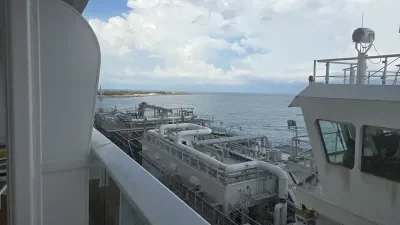
LNG-powered cruise ships use LNG fuel, at least in part, to power their propulsion systems. It's one of the cleanest-burning non-electric marine fuels in existence, helping to reduce a cruise ship’s greenhouse gas emissions by as much as 30%.
When used as a marine fuel, LNG helps to cut sulfur emissions by 99%, fine particle emissions by 99%, and nitrogen oxide emissions by up to 85%. This results in a significant improvement in air quality, particularly for communities in coastal areas and port cities.
LNG is made from natural gas (predominantly methane) that's cleaned, cooled, and compressed until it becomes a liquid. The volume of LNG is about 600 times smaller than its volume in its gaseous state. This makes it easy to store and carry as a cruise ship's fuel source to generate power and propulsion.

In addition to the environmental benefits, LNG-powered cruise ships experience less wear and tear on their engines, resulting in fewer repairs and lower maintenance costs. Engines designed to run on LNG also don't have to install scrubber systems or pay the higher prices associated with low-sulfur fuel.
Which LNG-powered cruise ships are at sea?
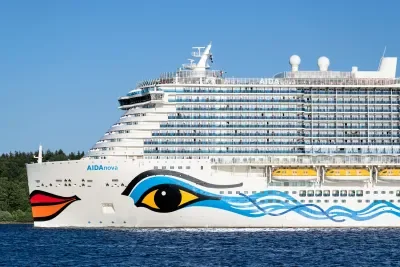
As of April 2026, over 20 LNG-powered cruise ships are sailing around the world. As previously mentioned, the German cruise line AIDA Cruises continues to stand out as a pioneering force in the industry, launching the first LNG-powered cruise ship in 2018.
AIDAnova was followed by Costa Smeralda in 2019, then Carnival's Mardi Gras — "the first LNG-powered ship in North America" — in 2021.
Today, Carnival Corporation & plc has more LNG-powered cruise ships than any other cruise company, surpassing Royal Caribbean Group and Norwegian Cruise Line Holdings.
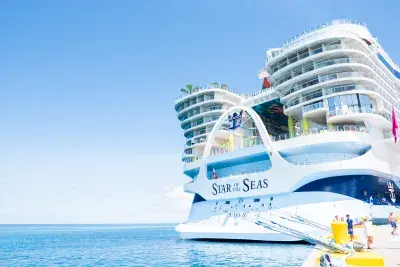
Across its various cruise brands, Carnival Corporation & plc now has eleven LNG-powered ships in service — ranging from AIDA Cruises to P&O Cruises, Carnival Cruise Line, Princess Cruises, and Costa Cruises.
Royal Caribbean Group follows closely behind, with six LNG-powered vessels operating for Royal Caribbean, TUI Cruises, and Silversea Cruises.
Interestingly, Norwegian Cruise Line Holdings does not operate any LNG-powered ships, while MSC Cruises and Disney Cruise Line each operate only three.
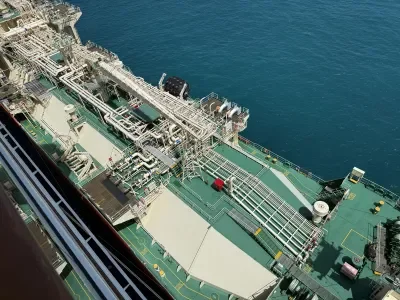
Here's a full list of every LNG-powered cruise ship in operation:
- AIDAnova (2018)
- Costa Smeralda (2019)
- Carnival's Mardi Gras (2021)
- P&O Iona (2021)
- AIDAcosma (2022)
- Costa Toscana (2022)
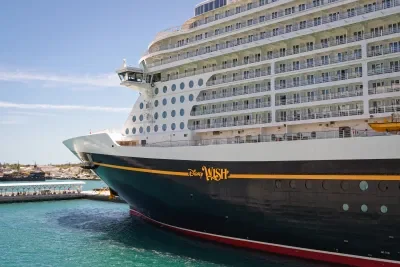
- Disney Wish (2022)
- Carnival Celebration (2022)
- P&O Arvia (2022)
- MSC World Europa (2023)
- MSC Euribia (2023)
- Silver Nova (2023)
- Carnival Jubilee (2023)
- Icon of the Seas (2024)
- Sun Princess (2024)
- Silver Ray (2024)
- Utopia of the Seas (2024)
- Disney Treasure (2024)
- Mein Schiff Relax (2025)
- MSC World America (2025)
- Star of the Seas (2025)
- Star Princess (2025)
- Disney Destiny (2025)
Cruise lines continue to expand their LNG fleets...

Tons of new LNG-powered vessels are already on order or under construction, and over the next several years, these ships are expected to enter service.
Legend of the Seas, for example, is one of the most highly anticipated additions, set to debut in July 2026 in Europe. Following the third Icon Class ship, cruise lines such as Carnival, MSC, and Disney are further expanding their commitment to LNG technology.
Ships like Carnival Festivale, Carnival Tropicale, MSC World Asia, MSC World Atlantic, and Disney Believe represent the next generation of LNG-powered vessels — helping to advance a more sustainable future for the cruise industry.
...while also advancing cleaner and more efficient technology
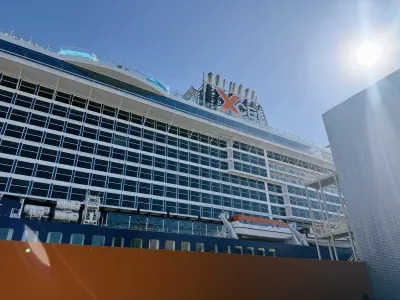
LNG-powered ships aren't the end-all, be-all solution to sustainable cruising. In fact, cruise lines have continued to invest in better solutions to improve fuel efficiency, reduce emissions, and optimize engine performance.
Most recently, Celebrity Cruises launched Celebrity Xcel, the first cruise ship with a flex-fuel engine capable of operating on methanol and two conventional marine fuels.
"As we innovate our ship design and offerings, we're also focused on equally evolving the fuel and technology landscape that powers them," said Jason Liberty, President and CEO of Royal Caribbean Group.
"By incorporating tri-fueled engines, we are ensuring that as alternative, low-carbon-based solutions become more viable, our ships will be ready to adapt and drive the industry forward to a more sustainable and net-zero emissions future."
Later this year, Viking Cruises' Viking Libra is set to debut as the world's first hydrogen-powered, zero-emissions cruise ship.

Elizabeth Wright
Elizabeth graduated from New York University's Arthur L. Carter Journalism Institute with her M.A. in Journalism in May 2023. Having sailed on over 30 cruises across different lines, including Royal Caribbean, Carnival, MSC, Margaritaville at Sea, and Princess, she loves sharing her insight and expertise on all things cruising!
In addition to writing for Cruise.Blog, Elizabeth has bylines in Business Insider, Royal Caribbean Blog, and Cruiseshipfood.com.