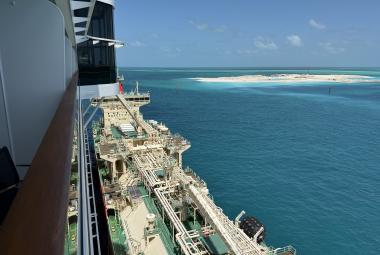
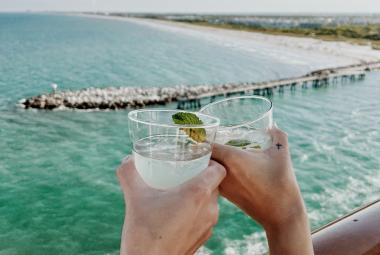
Cruising is a popular vacation choice, with over 37 million passengers embarking on ocean-going voyages in 2025. From all-you-can-eat buffets and included entertainment to exciting itineraries and more, there’s a lot to love about going on a cruise. However, it isn't all sunshine and rainbows at sea.
Cruise ship crowds can be overwhelming, and unrealistic expectations of Caribbean islands can lead to disappointment once travelers arrive. Many travelers find that the food isn't always the best, either.
There are even more universal travel realities that catch people off guard on cruises — including the crummy toilet paper.
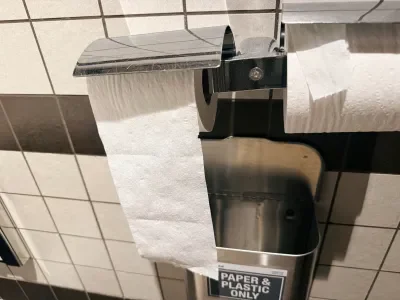
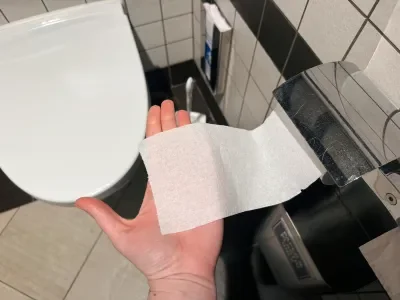
Cruise ship toilet paper is far from the plush three-ply comfort most people are used to at home. Instead, the thin-as-can-be toilet paper is closer to half-ply paper.
You might think it's a cost-saving measure, but it's actually because the onboard plumbing systems are designed to handle waste efficiently and prevent clogs. This means that cruise lines use thinner paper that dissolves easily in water.
It's a small detail compared to all the pros of cruises. However, it definitely stands out after a few days at sea!
Why is cruise ship bathroom toilet paper so bad?

Cruise ships feel like massive cities, but it's important to remember that they're floating cities. As such, they have different operational needs than standard hotels, restaurants, and retail stores.
Still, cruise ships are highly regulated and work with environmental government agencies to ensure that their waste practices are not only approved but are sustainable.
Additionally, most cruise ships have vacuum flush toilets that utilize suction to pull waste through the narrow pipes. This helps reduce the amount of water used with each flush, too.
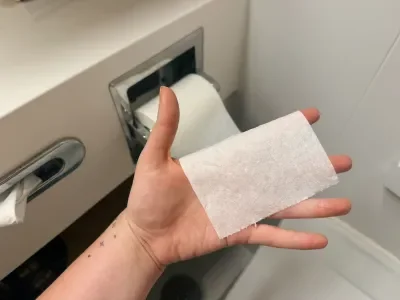
Enter the sandpaper-like toilet paper. Because cruise ships have smaller, highly specialized sewage pipes, everything that's flushed needs to quickly break down to prevent clogs.
Thicker three-ply paper can't consistently break down, so cruise lines use thinner paper that can rapidly dissolve to keep the entire waste system running smoothly at sea.
This means that you should avoid flushing anything but the cruise line's provided toilet paper. If you try to flush other hygiene products, especially feminine products, you could be responsible for causing major plumbing issues on the vessel.
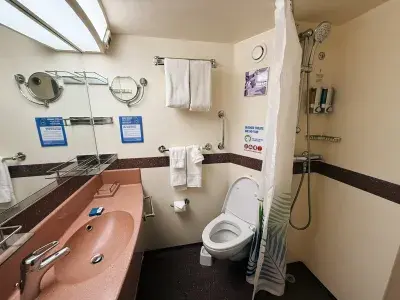
When a cruise toilet clog occurs, it's not just the single cabin that's impacted. Instead, multiple staterooms are generally affected as the issue works its way through the shared plumbing system.
Where does the poop go on a cruise ship?
Cruise ships have a special water-treatment system onboard that's typically divided into three categories: Grey water (sinks, laundries, and drains), black water (galleys and toilets), and bilge water (oil released from the engine compartments).
When black water (AKA human waste) enters the integrated treatment system, it passes into an aeration chamber that's filled with bacteria to break down organic contaminants dissolved in the wastewater.
Next, the wastewater passes through a membrane filtration system, where it undergoes additional filtering to remove additional impurities. During this phase, wastewater enters a settlement chamber, allowing the water to float to the top and denser substances to sink to the bottom.
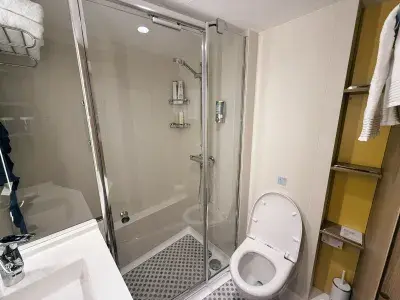
Finally, the water is disinfected using UV radiation, neutralizing any remaining pathogens. Clean, bacteria-free water — that's considered nearly equivalent in quality to treated tap water and safe for reuse — is left!
Some larger cruise ships have incineration facilities to deal with and treat solid waste at higher temperatures. Additionally, the ability to discharge wastewater depends on where the ship is docked, as some oceans and ports prohibit the practice.
For example, sewage typically cannot be released within miles of a shoreline or at shallow water depths.

Elizabeth Wright
Elizabeth graduated from New York University's Arthur L. Carter Journalism Institute with her M.A. in Journalism in May 2023. Having sailed on over 30 cruises across different lines, including Royal Caribbean, Carnival, MSC, Margaritaville at Sea, and Princess, she loves sharing her insight and expertise on all things cruising!
In addition to writing for Cruise.Blog, Elizabeth has bylines in Business Insider, Royal Caribbean Blog, and Cruiseshipfood.com.