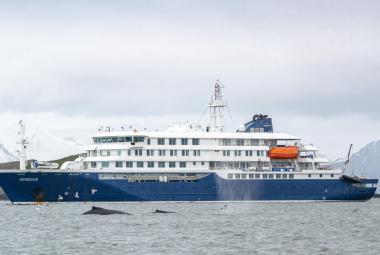
While public concern about the ongoing hantavirus outbreak continues to grow, one cruise passenger turned to social media to offer a firsthand update on conditions aboard the ship.
Jake Rosmarin, a travel content creator based in Boston, Massachusetts, has shared videos and posts documenting daily life during the voyage.
Most recently, he posted another update, saying the remaining passengers on the ship are doing well and in good spirits.
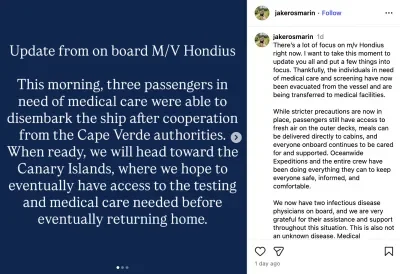
"This morning, three passengers in need of medical care were able to disembark from the ship after cooperation from the Cape Verde authorities," he begins.
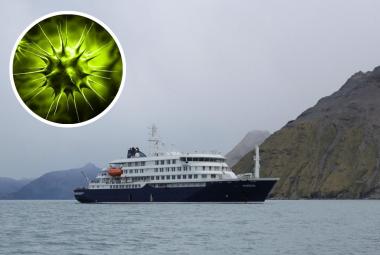
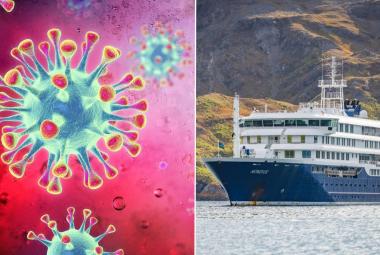
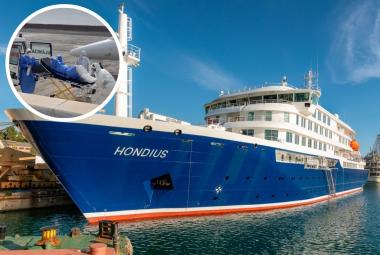
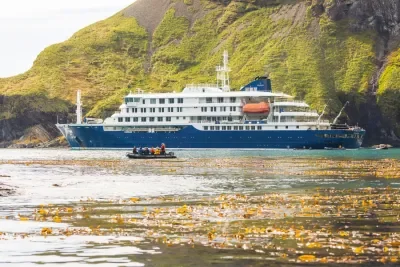
Continuing on, "I also want to address some misinformation circulating online. This is not a traditional cruise ship but an expedition vessel with approximately 150 people onboard, including both passengers and crew. These vessels operate in the polar regions and other environmentally sensitive areas that require extremely high cleaning standards and strict biosecurity protocols."
Rosmarin claims that the remaining guests have access to fresh air on the outer decks, and meals can be delivered to their staterooms.
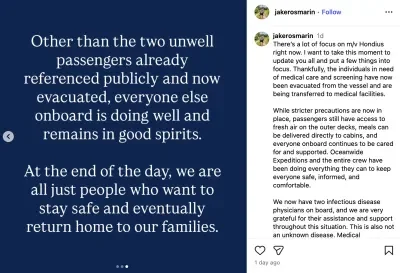
"Oceanwide Expeditions and the entire crew have been doing everything they can to keep everyone safe, informed, and comfortable. We now have two infectious disease physicians on board, and we are very grateful for their assistance and support throughout this situation," he adds.
Hantavirus is a rare, rodent-borne illness that's killed three people from the ill-fated cruise voyage, raising renewed concern about the deadly infection.

The World Health Organization (WHO) reported eight cases, including three confirmed via laboratory testing, as of May 6. Testing further revealed that the individuals contracted the Andes strain of the virus, which is transmissible from person to person.
This specific strain is found in parts of South America, such as Argentina, where the MV Hondius departed from on April 1. Early symptoms can look like the flu and include headaches, a fever, nausea or vomiting, muscle aches, back pain, cough, chest pain, and more.
After sailing away from Ushuaia, the Dutch-flagged passenger vessel called at Antarctica and Saint Helena before anchoring off the coast of Praia, the capital of Cape Verde.
The Associated Press reported that, as of Wednesday, the Argentine government's leading hypothesis is that one couple contracted the hantavirus during a bird-watching tour before boarding the cruise ship.
The 70-year-old Dutchman suddenly fell ill on the ship and passed away on April 11. His wife then collapsed at a South African airport while flying home to the Netherlands and died at a nearby hospital. The third fatality, a German passenger, was reported on May 2.
According to the WHO, people usually get infected through contact with infected rodents or their urine, droppings, or saliva. The serious zoonotic illness carries a mortality rate as high as 50% because the virus can affect vital organs like the kidneys and lungs.

Still, person-to-person transmission is considered extremely rare. Dr. Pablo Vial, an infectious disease doctor who studies hantavirus at the Institute of Sciences and Innovation in Medicine in Santiago, Chile, told NBC News that human transmission accounts for only 2% to 5% of all Andes virus cases.
Dr. Tedros Adhanom Ghebreyesus, the WHO's Director-General, said, "While this is a serious incident, WHO assesses the public health risk as low." However, given the incubation period, more cases may be reported.
Five states are monitoring cruise passengers for hantavirus

U.S. health officials in five states, including Arizona, California, Georgia, Texas, and Virginia, are monitoring residents who recently returned from the MV Hondius.
As of May 8, the Centers for Disease Control and Prevention (CDC) claimed that no hantavirus cases linked to the cruise ship outbreak have been reported in the United States. As such, the risk to the American public remains low.
"Hantavirus is not spread by people without symptoms, transmission requires close contact, and the risk to the American public is very low. CDC has the world’s leading experts on hantavirus and is lending its technical expertise when coordinating with interagency partners, state health offices, and international authorities on response and repatriation planning," said the CDC in a statement posted to X.

Hantavirus in the U.S. is also extremely rare. By the end of 2023, just 890 cases of hantavirus had been reported in the U.S. since surveillance began in 1993, according to the CDC.

Elizabeth Wright
Elizabeth graduated from New York University's Arthur L. Carter Journalism Institute with her M.A. in Journalism in May 2023. Having sailed on over 30 cruises across different lines, including Royal Caribbean, Carnival, MSC, Margaritaville at Sea, and Princess, she loves sharing her insight and expertise on all things cruising!
In addition to writing for Cruise.Blog, Elizabeth has bylines in Business Insider, Royal Caribbean Blog, and Cruiseshipfood.com.