Tensions in the Middle East remain high amid the ongoing conflict that erupted over the weekend. Travelers are understandably worried, with strikes and counterstrikes continuing across the region.
The ongoing military actions have deeply affected civilian life and travel logistics. Airlines, for example, have canceled hundreds of flights and issued travel waivers to customers.
And although the conflict is far away from Mediterranean ports in countries like Italy and Greece, itineraries around the Arabian Gulf region have been impacted by the violence.
Here's a look at how the Iran conflict is affecting cruise operations so far.
Middle East travel news: Which cruise ships have been impacted?
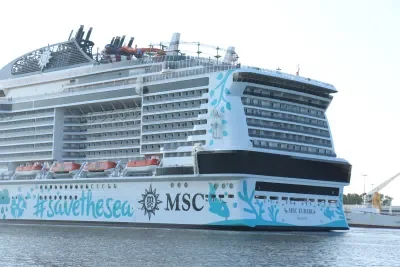
MSC Euribia was supposed to stay in Dubai for a short visit from Feb. 27—28. However, due to the ongoing conflict, the 181,541-gross-ton vessel has remained in the United Arab Emirates. It's unclear when the ship will be able to depart.
Consequently, MSC Cruises has canceled the remainder of MSC Euribia's sailings from Dubai, including the departures on March 7, 14, 21, and 28, 2026. The cruise line cited "sudden security events" as the reason for the cancellations, with the decision being made with guests' "safety and wellbeing" as its highest priority.
They are working with airlines, such as Emirates and Etihad Airways, to help fly the stranded travelers home. Because of limited airline capacity that's being prioritized based on original flight dates, MSC is also exploring charter flights.
That said, there have not been any changes announced to MSC Euribia's European season, which is slated to begin on May 2 in Kiel, Germany.
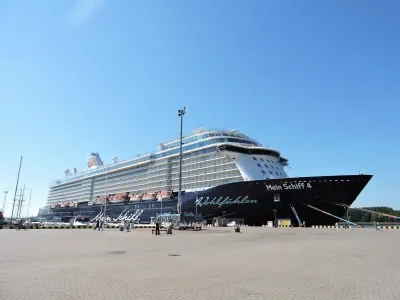
Moving on, TUI Cruises' Mein Schiff 4 and Mein Schiff 5 have not been able to continue their scheduled Middle Eastern itineraries. Instead, both vessels remain docked in Abu Dhabi and Doha, Qatar, respectively.
The cruise line has canceled sailings for the Mein Schiff 4 up through and including its March 23, 2026 departure, along with voyages aboard the Mein Schiff 5 up through and including its March 29 itinerary. TUI is also assisting current guests with their return flights, arranging transportation to Dubai, where the Dubai International Airport has resumed limited operations.

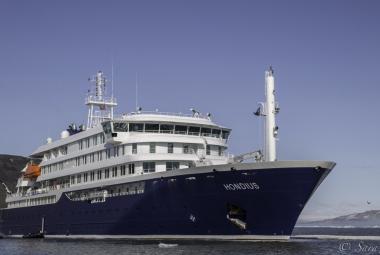
Finally, Celestyal Journey remains in port in Doha, Qatar, while the cruise line assesses the situation to determine whether the vessels can safely resume their itineraries.
According to Celestyal Cruises' Facebook, the remainder of the Middle Eastern season for Celestyal Journey has been canceled, with all sailings through and including March 30 called off.
Moreover, as Celestyal Discovery remains stuck in Dubai, the cruise line made the decision to cancel all voyages aboard the ship through and including the 4-night Iconic Aegean cruise on Marh 23.
Cruise Ships Are Commonly Rerouted to Avoid Conflict
There's no one-size-fits-all approach to handling geopolitical crises at sea. However, cruise lines are well-versed in making strategic adjustments when necessary to keep passengers and crew members safe.
For example, Royal Caribbean routed ships away from Russia in 2022 when the country invaded Ukraine during the ongoing Russo-Ukrainian War. Additionally, the cruise line's 9-month world cruise was rerouted to Africa to avoid the Red Sea last year when tensions escalated as a result of the Houthis' attacks.
Most recently, Royal Caribbean suspended all cruises calling at its private destination in Haiti amid the country's escalating gang violence and political instability.
What is Going on in Iran?

On Feb. 28, the United States and Israel began launching a series of sustained air and missile strikes against Iran targeting the country's missile infrastructure, military sites, and leadership, as reported by the BBC. Consequently, Iran's Supreme Leader, Ali Khamenei, and several high officials were killed.
Iran retaliated against the American and Israeli strikes by launching ballistic missiles towards Israel and several Gulf states, striking (or being intercepted) in neighboring countries like Lebanon, Cyprus, Oman, Saudi Arabia, Bahrain, Kuwait, Qatar, and the United Arab Emirates.
They also opted to halt all shipments of oil and liquefied gas through the Strait of Hormuz, an important Persian waterway that sees around 20% of global oil shipments.
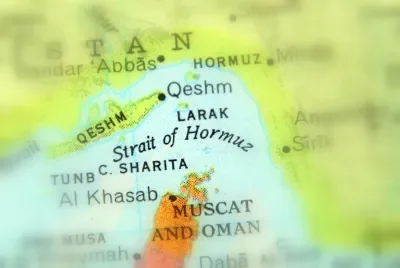
The Joint Maritime Information Center reported that, on an average day, around 138 vessels travel through the Strait of Hormuz. But as of March 5, the number dropped to "single-digit" levels, "with only 02 confirmed commercial transit observed in the past 24 hours."
As a result, oil prices have begun to skyrocket, with the cost of West Texas Intermediate oil, the U.S. oil benchmark, reached $86.57 per barrel. The increased oil prices have created a lot of uncertainty for cruise operators, including Carnival Cruise Line.
According to U.S. Defense Secretary Pete Hegseth, the U.S. operation against Iran is still in its "early" days. Larger waves are expected to strike key sites across Iran, with the goal of U.S. and Israeli air forces taking control of the Iranian skies in under one week.
"This was never meant to be a fair fight, and it is not a fair fight," Hegseth said. "We are punching them while they’re down, which is exactly how it should be."
Israel Katz, the Israeli Defense Minister, said that attacks were "pre-emptive strike[s]" to "remove threats against the state of Israel."
Meanwhile, White House press secretary Karoline Leavitt reiterated the objectives for the country's military strikes on Iran during a press conference on March 4:
- Destroy the Iran's ballistic missile program
- "Annihilate" Iran’s naval presence in the region
- Dismantle Iran’s terrorist proxies that have taken responsibility for attacks on U.S. coalition forces and destabilized the region
- Prevent Iran from working towards a nuclear weapon
"It’s safe to say that thus far, Operation Epic Fury has been a resounding success," she added.

Elizabeth Wright
Elizabeth graduated from New York University's Arthur L. Carter Journalism Institute with her M.A. in Journalism in May 2023. Having sailed on over 30 cruises across different lines, including Royal Caribbean, Carnival, MSC, Margaritaville at Sea, and Princess, she loves sharing her insight and expertise on all things cruising!
In addition to writing for Cruise.Blog, Elizabeth has bylines in Business Insider, Royal Caribbean Blog, and Cruiseshipfood.com.