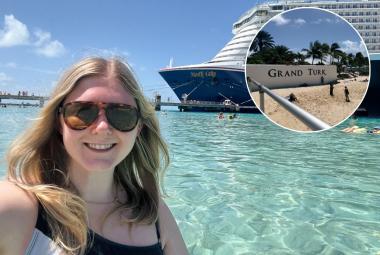
With rising fuel costs, you might be wondering whether to drive or fly to your next cruise.
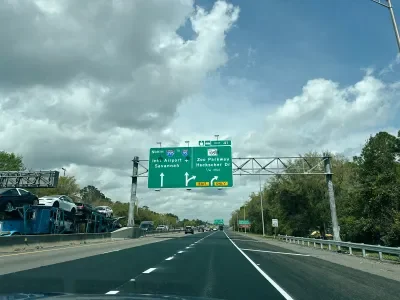
Growing up, my family often made the nine-plus-hour drive from North Carolina to Florida for cruises because it was easier than flying due to my mom's chronic health issues. I can't say I loved being trapped in a car with my sister for hours upon hours, but we always seemed to make the most of it.
Many might scoff at the idea of piling into the car instead of taking a short flight. However, plenty of cruisers opt to drive to the port.
Here are four reasons you may want to skip the airport and consider driving to your next cruise.
No airport stress
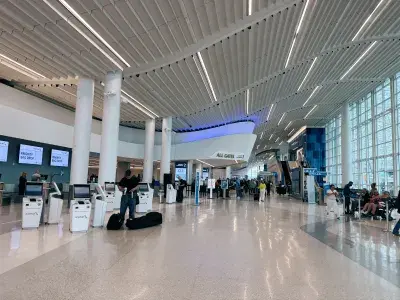
For starters, you don't have to deal with the usual airport headaches like long security lines, crowded terminals, and delayed (or canceled) flights.
By driving, you have a little more control over when you leave, rather than settling on an inconvenient flight time just because it was a little cheaper.
Of course, you still want to budget for situations out of your control, like traffic jams and other unexpected delays. However, even with those possibilities, driving often gives you more flexibility and predictability on the way to your cruise.
You can pack as much as you want
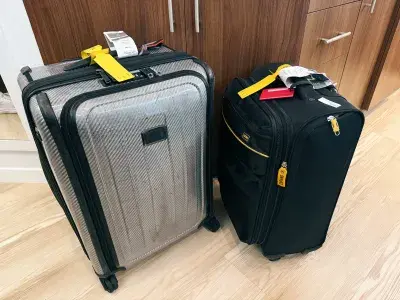
Airlines have strict baggage limitations. In addition to the hefty checked bag fees, suitcases typically can't weigh more than 40 or 50 lbs, depending on which carrier you're flying with. American Airlines, for example, charges $45 per bag (if you pre-pay online). This comes out to $90 per person for a round-trip flight.
If you are only bringing a small carry-on, you're even more limited on space and have to follow the Transportation Security Administration’s (TSA) rules, which place strict limits on how much liquid you can carry through security.
Conversely, driving gives you the freedom to pack what you want without worrying about bag fees or TSA restrictions.
It can be cheaper than flying
Fuel prices have risen over 60% since May 2025, according to Fortune. As of May 6, 2026, the cost of Brent oil, the global benchmark, was $116.55, whereas the price per barrel one year ago was around $62.66.
Rising fuel costs affect both airfare and the price of gasoline, which can influence the cost of driving to a cruise port as well. However, driving to a cruise port can still be the more financially responsible choice, especially for larger families.
Driving to the cruise port allows you to have a bit more spontaneity when booking last-minute vacations since you don't have to factor in pricey flights.
You can plan a fun pre- or post-cruise adventure

One way my family always made the driving experience more interesting was by planning fun post-cruise trips in cities like Savannah, Georgia, and Charleston, South Carolina. Not only did this help split up the drive, but the vacation did not feel like it was over the second we debarked the ship.
Over a decade later, and I still have a vivid memory of waking up at the riverfront Bohemian Hotel in Savannah and enjoying room service breakfast while watching the sunrise over the river.
Driving to your cruise isn't just about getting from point A to point B. If you plan it right, you can extend your vacation, explore new spots, and come away with lasting memories beyond cramming into a car and hearing "Are we there yet?" a million times.
The nearest cruise port might be closer than you think
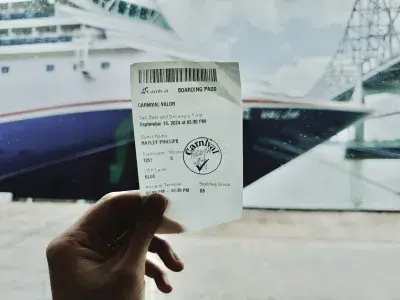
Finally, just because you're eyeing a ship like Star of the Seas or Carnival's Mardi Gras out of Port Canaveral doesn't mean they are automatically the best or only choice for your next vacation.
The closest cruise port might not necessarily be ten or fifteen hours away. Many cruise lines have begun operating out of smaller ports like New Orleans, Louisiana, Norfolk, Virginia, Jacksonville, Florida, and even Philadelphia, Pennsylvania.
Depending on where you live, choosing a closer departure port can be a smart way to simplify your travel plans. For example, those in the DMV area are less than four hours away from three ports: Baltimore, Norfolk, and Philadelphia.

Elizabeth Wright
Elizabeth graduated from New York University's Arthur L. Carter Journalism Institute with her M.A. in Journalism in May 2023. Having sailed on over 30 cruises across different lines, including Royal Caribbean, Carnival, MSC, Margaritaville at Sea, and Princess, she loves sharing her insight and expertise on all things cruising!
In addition to writing for Cruise.Blog, Elizabeth has bylines in Business Insider, Royal Caribbean Blog, and Cruiseshipfood.com.