Now entering its fourth week, the war in Iran continues to send shockwaves through the travel industry, with widespread flight disruptions and canceled cruises across the Middle East and Arabian Gulf region.
Not only that, but multiple cruise ships remain stuck in the Gulf, as the Strait of Hormuz is closed to international maritime traffic. Consequently, the vessels cannot leave the area or reposition to other ports.
Cruise ships stuck in the Middle East
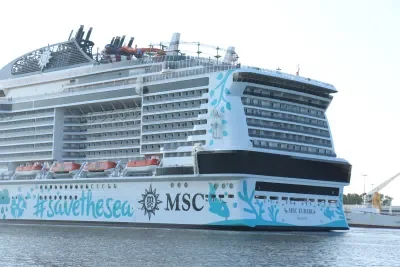
MSC Euribia is currently stuck in Dubai, United Arab Emirates. The 181,541 gross-ton vessel is scheduled to begin offering seasonal Europe cruises on May 2, 2026, from Kiel, Germany. MSC Euribia is also the largest cruise ship stranded in the region due to the ongoing conflict.
Celestyal Journey is one of two ships operated by Celestyal Cruises that are stuck in the Arabian Gulf. The vessel is in Doha, Qatar, with her next voyage currently scheduled for April 11, 2026, from Piraeus (Athens), Greece.
Celestyal Discovery is the other vessel from Celestyal Cruises impacted by the crisis. She's stranded in Dubai. However, Celestyal plans to resume operations by April 10, 2026, from Piraeus (Athens), Greece.
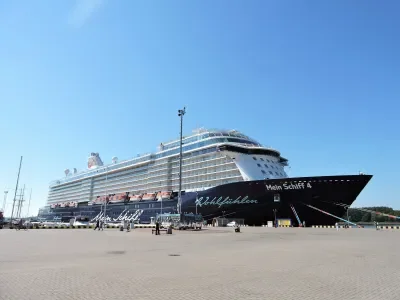
Mein Schiff 4, a Blu Motion class ship owned by TUI Cruises, is currently in Abu Dhabi, United Arab Emirates. According to the cruise line, her next scheduled voyage is not until May 1, 2026. The 20-night repositioning cruise from Cape Town, South Africa, to Barcelona, Spain, was recently canceled.
Mein Schiff 5 is another Blu Motion Class vessel stuck in the Middle East — Doha, Qatar, to be exact. The remainder of her season in the region abruptly ended after the war broke out, resulting in the cancellation of her repositioning cruise from South Africa to Europe. The next scheduled cruise is supposed to depart on May 1, 2026, from Heraklion (Crete), Greece.
Aroya is the sole ship operated by Aroya Cruises. Currently stranded in Dubai, the small cruise line expects to resume operations on May 14, 2026, from Jeddah, Saudi Arabia.

Note that all cruise schedules, ship positions, and planned departures remain subject to change as the ongoing situation in the Middle East continues to develop.
Strait of Hormuz closed
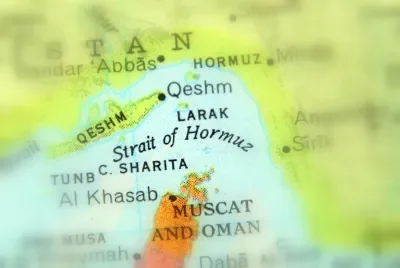
Iran effectively closed the Strait of Hormuz, which connects the Persian Gulf to the rest of the world. As such, maritime traffic through this critical waterway has been disrupted for over two weeks.
The Joint Maritime Information Center reported that, on an average day, around 138 vessels travel through the Strait of Hormuz. But as of March 24, there were just four transits on March 22 and six on March 23. As such, the center notes that "commercial traffic through the Strait of Hormuz remains extremely limited."
Because the Persian waterway sees around 20% of global oil shipments, oil prices have begun to skyrocket. For example, the cost of Brent oil, the main global oil benchmark, reached $99.75 per barrel on March 25, 2026. Comparatively, the price one month ago was $71.49 per barrel, Fortune reported.
The war and oil crisis have affected travel and daily life across the region
In Egypt, for example, shops, malls, and restaurants will close at 9:00 p.m. — except on Thursdays and Fridays, when closing time is extended to 10:00 p.m. — effective March 28. This measure was implemented to help reduce the country’s energy consumption, as reported by Egypt Today.
Meanwhile, in Bangkok, the oil shortage has caused longer wait times at the city’s main airport, as fewer taxis are able to operate due to fuel concerns. Normally, around 6,000 taxis serve the airport, but according to The Nation Thailand, that number has dropped to roughly 2,500.

Elizabeth Wright
Elizabeth graduated from New York University's Arthur L. Carter Journalism Institute with her M.A. in Journalism in May 2023. Having sailed on over 30 cruises across different lines, including Royal Caribbean, Carnival, MSC, Margaritaville at Sea, and Princess, she loves sharing her insight and expertise on all things cruising!
In addition to writing for Cruise.Blog, Elizabeth has bylines in Business Insider, Royal Caribbean Blog, and Cruiseshipfood.com.