![(Credit: Reuters [Right])](/sites/default/files/styles/tablet_2x/public/2026-07/Concordia-Captain-Hero-Credit-Reuters.webp?itok=xEs1ffWN)
The Costa Concordia wreck is trending thanks to Netflix's latest documentary titled "Shipwrecked: Nightmare at Sea." This 89-minute special features never-before-seen footage, including black box recordings and survivor accounts from the ill-fated Mediterranean journey.
Much of the documentary also focuses on the actions of the ship's captain, Francesco Schettino, whose decisions have remained a controversial aspect of the wreck, having decided to veer from the planned course to do a "sail-by salute" off the coast of Giglio Island.
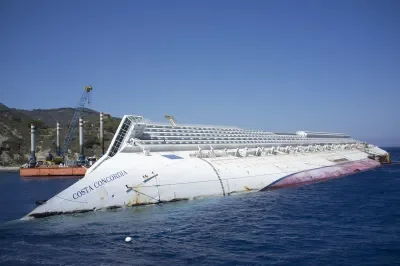
As a result, the Costa Concordia collided with rocks, leaving a massive gash in the ship's hull. Water quickly flooded the vessel, causing it to lose power and capsize near Giglio Island on January 13, 2012.
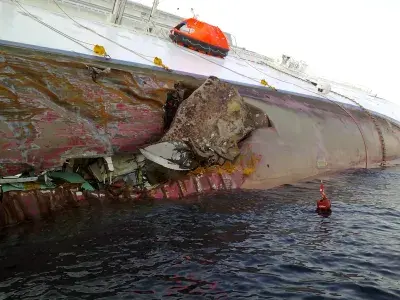
Although most passengers were evacuated, the Costa Concordia disaster claimed 32 lives, the youngest being a 5-year-old girl from Rimini, Italy.
In the years that followed, Schettino was placed on trial for his role in the disaster, eventually getting sentenced to 16 years in prison.
What happened to the captain of the Costa Concordia?
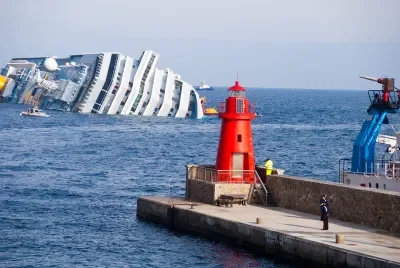
During the disaster, Schettino was accused of abandoning the ship too early. He was spotted on a lifeboat when hundreds of passengers and crew members were still stranded on the vessel.
Per transcripts released by the Washington Post, Captain Schettino confirmed abandoning ship during the ongoing rescue efforts. As such, he broke the maritime tradition of the captain going down with the ship.
In the transcript, an Italian Coast Guard officer can be heard ordering Schettino back to the ship, saying, "You have declared 'Abandon Ship.' Now, I am in charge. You go on board! Is that clear?"
When Schettino asked how many dead bodies were found, the officer replied, "You are the one who should be telling me that! Christ! You want to go home, Schettino? It's dark, and you want to go home? Go on board and tell me what can be done, how many people there are, and what they need. Now!"
Despite these repeated orders, Schettino never re-boarded the Costa Concordia, thus breaking maritime tradition under the International Convention for the Safety of Life at Sea (SOLAS), which states that it is the captain's responsibility to direct damage control and organize a safe evacuation.
Following the Costa Concordia wreck, an investigation was opened focusing on the faults in the procedures taken by the crew and Schettino, especially after abandoning the ship with passengers still stranded on board.

Schettino was placed on house arrest four days after the disaster to await trial. In May 2013, during his house arrest, the Italian Ministry of Infrastructures and Transports released its final report, claiming that the cruise "ship was sailing too close to the coastline, in a poorly lit shore area, under [Master Schettino's] command who had planned to pass at an unsafe distance at night time and at high speed."
The trial began a few months later on July 9, 2013, during which prosecutors referred to Captain Schettino as "a reckless idiot." That said, Schettino continued to deny all charges and insisted that he was being used as a scapegoat for the cruise line.
"All the responsibility has been loaded onto me with no respect for the truth or for the memory of the victims," Schettino said.

In February 2015, Schettino was finally convicted and sentenced to sixteen years in prison for manslaughter, causing a shipwreck, abandoning the ship before all passengers and crew had been safely evacuated, and giving false information about the situation.
Schettino tried to appeal his case for two years, but he was unsuccessful, as reported by The Maritime Executive. He eventually turned himself in to the authorities and began serving his sixteen-year sentence in May 2017 at the Rebibbia Prison in Rome, Italy. He will be eligible for release in 2032.
How many people died on the Costa Concordia?
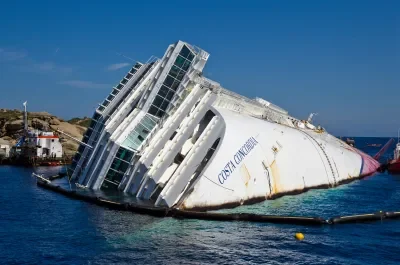
More than 4,000 passengers and crew members were forced to evacuate the ship after Costa Concordia struck the Scole Rocks near Giglio Island in Italy.
Schettino delayed evacuations, which contributed to the chaos and confusion during the emergency situation. He didn't give the command until nearly 11:00 p.m., or roughly an hour and fifteen minutes after the ship collided with the rocks. By this point, the ship was listing to the starboard side, making many of the port-side lifeboats impossible to launch.
As such, Schettino's delay is often considered one of the worst failures of leadership during a maritime disaster, leading to a chaotic six-hour evacuation and causing the deaths of 32 people.

Elizabeth Wright
Elizabeth graduated from New York University's Arthur L. Carter Journalism Institute with her M.A. in Journalism in May 2023. Having sailed on over 30 cruises across different lines, including Royal Caribbean, Carnival, MSC, Margaritaville at Sea, and Princess, she loves sharing her insight and expertise on all things cruising!
In addition to writing for Cruise.Blog, Elizabeth has bylines in Business Insider, Royal Caribbean Blog, and Cruiseshipfood.com.