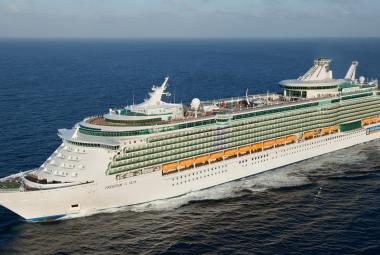
When most people think about cruise ships, they picture endless buffets, water slides, live entertainment, and more. Still, cruises are essentially floating cities, and they're equipped to handle every aspect of life at sea, including death.
All cruise ships have morgues, though very few passengers realize it. The morgues are smaller than those in hospitals and are discreet, typically nothing more than stainless-steel refrigeration rooms with individual compartments.
It is rare for guests to see the inside of a cruise morgue, even on extra-cost behind-the-scenes tours.

However, one crew member shared a glimpse at what the morgue looks like on one of the newest ships at sea: Carnival's Mardi Gras.
Rory is a cruise ship paramedic who works for Carnival Cruise Line. However, he also posts TikToks about what it is like to live and work on a ship, ranging from cabin tours to crew benefits.
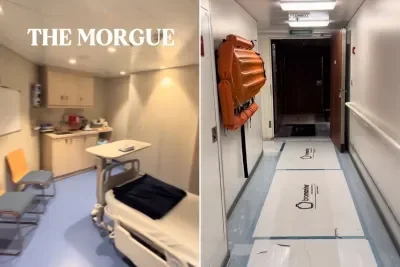
While Mardi Gras was in dry dock, he captured footage of the ship's morgue up close. Since posting, the video has received over 1.3 million views, 56,000 likes, and 3,700 shares.
What happens when someone dies on a cruise ship?
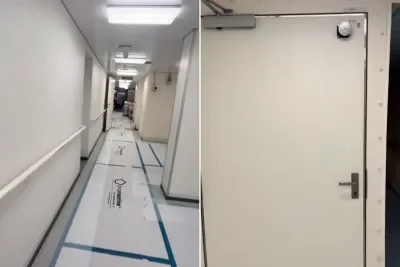
"In the incredibly rare event that you die on a cruise ship, you'll be moved to the morgue," Rory began. However, before that happens, the body is cleaned and changed.
Cruise ships don't have dedicated staff for the morgue. Instead, deaths are verified by the physicians, then by local officials in port. According to Rory, his ship's medical team consists of three doctors, four nurses, two paramedics, and two health care assistants.
On Mardi Gras, the morgue is a separate room located down the hall from the medical facility, although Rory notes that some morgues are within the medical center themselves.

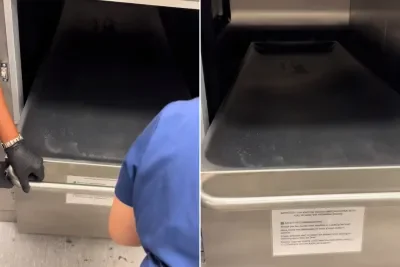
He continues and shows three individual compartments stacked on top of one another, revealing that Mardi Gras, a ship measuring 180,800 gross tons, can store three deceased bodies simultaneously. In his experience, however, the morgue has never reached full capacity.
"As you can see, the slab slides out, and we can transfer the deceased onto there, where the freezer is then activated," he says.
The freezer keeps the bodies at a controlled temperature until they're disembarked from the cruise ship.
Sometimes, they're removed at the next port of call. However, Rory says the deceased bodies are typically disembarked at the home port — it all depends on the local laws and regulations.
For ships headed to U.S. ports, any deaths onboard must be reported immediately to the Centers for Disease Control and Prevention (CDC), USA TODAY reported.
Additionally, the U.S. Cruise Vessel Security and Safety Act of 2010 requires that missing persons, suspicious deaths, and homicides be reported to the Federal Bureau of Investigation (FBI).
The onboard crew is trained to assist the deceased's travel companions in making arrangements for early disembarkation and repatriation, notifying family members, and providing emotional support.
The cost of transporting the body home falls to the deceased’s family or travel party. However, some travel insurance policies may help cover these expenses.

Elizabeth Wright
Elizabeth graduated from New York University's Arthur L. Carter Journalism Institute with her M.A. in Journalism in May 2023. Having sailed on over 30 cruises across different lines, including Royal Caribbean, Carnival, MSC, Margaritaville at Sea, and Princess, she loves sharing her insight and expertise on all things cruising!
In addition to writing for Cruise.Blog, Elizabeth has bylines in Business Insider, Royal Caribbean Blog, and Cruiseshipfood.com.