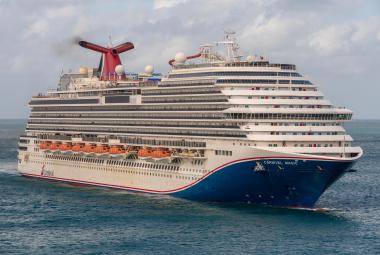
Carnival is one of the most well-known cruise lines at sea. However, many other lines operate under its parent company's umbrella.
Carnival Cruise Line is owned by Carnival Corporation & plc, which is the world's largest cruise operator, with more than seven distinct brands and 90 ships sailing worldwide.
The most popular lines include Carnival Cruise Line, Princess Cruises, and Holland America Line. That said, its portfolio encompasses everything from luxury expedition vessels to regionally focused brands in Europe.
What other cruise lines does Carnival own?
AIDA Cruises
Carnival Cruise Line
Costa Cruises
Cunard Line
Holland America Line
P&O Cruises
Princess Cruises
Seabourn Cruise Line
Carnival Cruise Line

As the namesake brand of Carnival Corporation & plc, Carnival Cruise Line is the company's largest and most recognizable cruise line.
The cruise line was founded in 1972 by Ted Arison. During the company's early years, it operated one ship, Mardi Gras, that was purchased from the Canadian Pacific Line.
Over the next six years, Carnival acquired two more ships from the Canadian Pacific Line, adding the Carnivale and Festivale to its fleet. It wasn't until 1982 that Carnival launched its first purpose-built cruise ship, Tropicale.

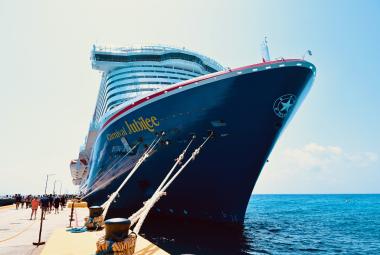
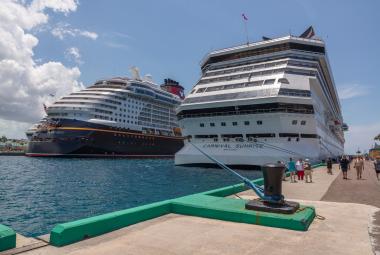
Today, Carnival operates a fleet of 29 ships, ranging from the Carnival Sunshine to the Carnival Jubilee. They are expected to welcome five more vessels into their fleet between 2027 and 2033, including the cruise line's largest ships ever built.
Read more: I took my first Carnival cruise on one of its newest ships. Here are my brutally honest thoughts
Holland America Line
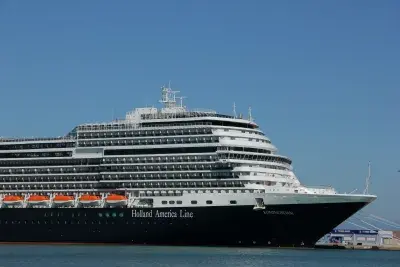
Holland America Line's origins trace back over 150 years, to 1873. The company's early history began in the Netherlands, where it was founded as a transatlantic shipping and passenger line connecting Europe and North America. By 1971, the company had abandoned its traditional services and began operating solely as a cruise line.
In 1989, Holland America Line was acquired by Carnival Corporation. Following the acquisition, multiple purpose-built ships were ordered from the Fincantieri shipyard in Italy. The 55,000 gross-ton Statendam was the first to enter service in 1993.
Today, Holland America Line is known as a more adult-focused brand. Unlike Carnival's "fun ships," you won't find any mini-golf courses, waterslides, or roller coasters aboard Holland's vessels. Instead, the line is renowned for its port-intensive itineraries, culturally rich onboard amenities, and world-class cuisine.
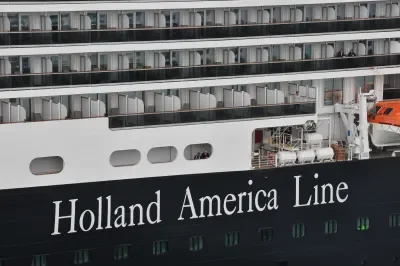
The small fleet has just 11 ships, including the MS Volendam (1999), MS Noordam (2006), and MS Rotterdam (2021). At the time of publication, Carnival Corporation & plc had not announced any new ship orders for Holland America Line.
Read more: Holland America Ships By Age — Newest to Oldest
Seabourn Cruise Line
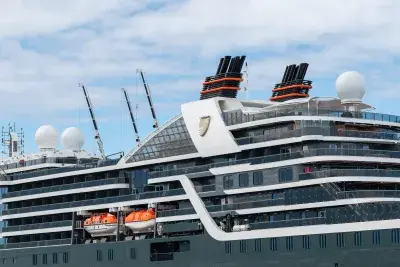
Seabourn is Carnival Corporation & plc's ultra-luxury brand. Founded in 1986, it's a younger addition to Carnival's portfolio compared to established companies like Cunard, P&O, and Holland America Line. However, it has quickly built a reputation for delivering one of the most upscale, luxurious experiences in the industry.
Carnival Corporation purchased a 25% stake in the cruise line less than five years after its first ship entered service in 1988. It increased its stake to 50% in 1996, finally purchasing the remaining 50% stake in Seabourn in 1998.
Each of Seabourn's six all-suite ships carries just a few hundred guests, leaning into its yacht-like atmosphere. The onboard experience is characterized by intuitive, personalized service, world-class culinary options, luxuriously appointed suites, and more.
Cunard Line
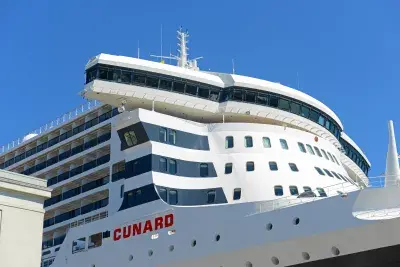
One decade after acquiring Holland America Line, Carnival locked eyes on Cunard, a brand with a long history dating back to the 1800s.
When the company was first founded, it primarily focused on transatlantic passenger service. However, it eventually transitioned into luxury leisure cruising when passenger ships started to become unprofitable due to the introduction of air travel.
In 1998, Carnival Corporation acquired Cunard, intending to rebuild the luxury brand on its storied British traditions. Today, the small fleet is known for its classic elegance, refined onboard experiences, and high standards of service.
Read more: What it's like on the world's last ocean liner: Cunard’s Queen Mary 2
Princess Cruises

Princess Cruises is another popular line owned by Carnival Corporation & plc. That wasn't always the case, though. Princess Cruises was initially founded in 1965 by Stanley McDonald, seven years before Carnival Cruise Line hit the high seas.
In 1974, Princess Cruises was acquired by Britain's Peninsular & Oriental Steam Navigation Company (P&O). After the acquisition, the Spirit of London was transferred to Princess and renamed Sun Princess, becoming the first vessel to bear the popular ship name.
Roughly 26 years later, P&O established its cruise operations as a separate, independent company called P&O Princess Cruises. Then, three years later in 2003, the company finally merged with Carnival, thus creating the world's largest cruise operating company, Carnival Corporation & plc. Supposedly, the lucrative deal was worth around $5.4 billion, which is equivalent to $9.54 billion in today's money.
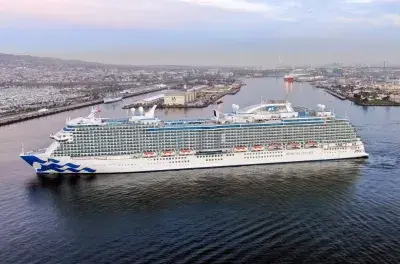
This merger brought multiple cruise lines under the Carnival umbrella, including P&O Cruises, Princess Cruises, AIDA, and P&O Australia. The latter, however, ceased operations in 2025.
Today, Princess Cruises operates a moderate-sized fleet of just 17 ships, with the oldest being Grand Princess (1998) and the newest being Star Princess (2025).
Read more: 5 things I liked better about Princess than Carnival, after my first Princess cruise
P&O Cruises
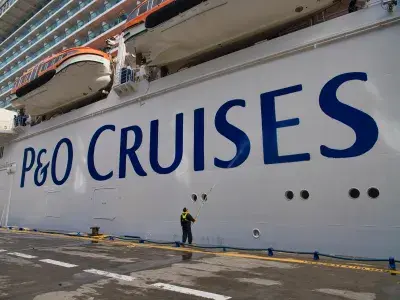
P&O Cruises' official history dates back to the early 1800s, when Brodie McGhie Willcox and Arthur Anderson formed an association with a steamship owner from Ireland. A few years later, the trio won a contract and began transporting passengers and mail from England to the Iberian Peninsula.
In 1844, P&O began offering leisure cruises from England to the Mediterranean. These sailings are widely regarded as some of the first leisure cruises ever offered — long before mainstream cruises were offered from ports like Miami or Port Canaveral.
Over 100 years later, P&O shifted its focus fully toward leisure cruising, establishing P&O Cruises as a dedicated cruise brand in 1977.
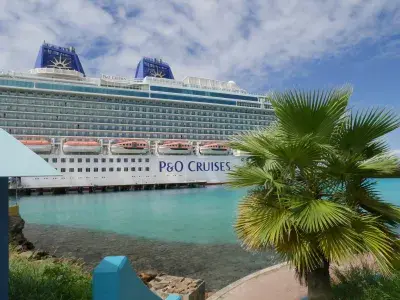
In 2000, P&O Cruises spun off its cruise operations and formed P&O Princess Cruises, later merging with Carnival Corporation in 2003. Since P&O is headquartered in the United Kingdom, "plc" was added to the company's official name to indicate that it's a publicly listed company in the UK.
AIDA Cruises
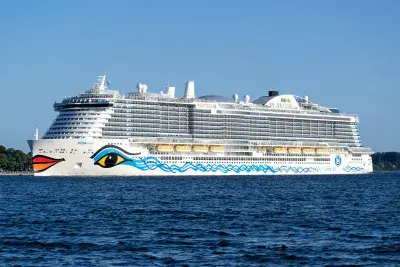
AIDA Cruises caters primarily to the German-speaking market. As such, it isn't a popular choice for North American cruisers. That said, AIDA ships are famous for their bright hull artwork that makes their vessels instantly recognizable.
The cruise line was initially founded in 1952 as a German shipping company. P&O Cruises took a majority 51% stake in the cruise side of operations in 2001, retaining the remaining 49%. As such, when P&O Princess Cruises was acquired by Carnival in 2003, so was AIDA Cruises.
Fun fact: AIDAnova, an Excellence Class vessel that launched in 2018, was the world's first LNG (liquefied natural gas)-powered cruise ship.
Costa Cruises
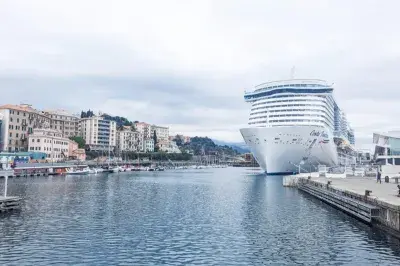
Costa Cruises is an Italian cruise line that was founded in 1948. Like AIDA, it primarily serves a European market and has a small fleet of just nine vessels, with the oldest setting sail in 2003.
Carnival and Airtours PLC purchased Costa Cruises for $300 million in 1997, with Carnival eventually taking full control of the cruise line in 2000 for over $500 million.
However, even if you've never sailed or seen a Costa ship, you've likely heard of the infamous Costa Concordia disaster. In 2012, a Costa cruise ship capsized off the coast of Italy shortly after departing from Civitavecchia, Italy, killing over 30 people.

Elizabeth Wright
Elizabeth graduated from New York University's Arthur L. Carter Journalism Institute with her M.A. in Journalism in May 2023. Having sailed on over 30 cruises across different lines, including Royal Caribbean, Carnival, MSC, Margaritaville at Sea, and Princess, she loves sharing her insight and expertise on all things cruising!
In addition to writing for Cruise.Blog, Elizabeth has bylines in Business Insider, Royal Caribbean Blog, and Cruiseshipfood.com.